The correct process for cleaning and sanitizing wine making equipment is Pre-rinse, Wash, Sanitize, and Rinse again.
Fermentistry.com
Let’s be direct, readying equipment for winemaking is not exactly a whole lot of fun, however it’s an absolutely crucial part of winemaking. When cleaning and sanitizing is done badly, you risk all your hard work being wasted when your wine goes bad. Proper cleaning and sanitizing are crucial to ensure the safety and quality of your homemade wine.
By reading this article you will learn the difference between washing and sanitizing. We’ll cover which agents should be used to wash or sanitize a particular material. Technique does matter, so we’ll provide a guide for the agents safe and effective use.
Supplies for Washing and Sanitizing Winemaking Equipment
- Long handle bottle brush (soft bristle)
- Dish brush (soft bristle)
- Soft sponge
- Dish-washing or cleaning gloves
- A washing agent e.g. PBW (Powdered Brewery Wash) we recommend Five Star PBW
- A sanitizing agent e.g. Potassium or Sodium Metabisulfite we recommend Star San
Washing and Sanitizing Winemaking Equipment
The process of cleaning and sanitizing is made up for 4 steps:
- Pre-rinse
- Wash
- Sanitize
- Rinse again.
Washing is the process of removing organic and inorganic contaminants by using water and soap or detergent. Washing agents like detergent are designed to assist in the break down, emulsification, and dispersing of these contaminants. Once the contaminants are broken down, they can be washed away.
What is sanitization? Winemakers often use the terms “sanitization” and “sterilization” interchangeably however, they do not mean the same thing. Sanitization is a limited form of sterilization. It is the process of eradicating living microorganisms like wild yeast, down to an acceptable level so they have no adverse effects on winemaking.
Sterilization is the process of eradicating all living microorganisms by using specialized technology and methodologies. This is not needed for winemaking.
Step 1: Pre-Rinsing Winemaking Equipment
The goal here is to remove organic material while it’s still wet, before it hardens onto a surface. So, as soon as you finish using a piece of equipment, and while the organic material remains wet, rinse the equipment with cold water. Rinse the equipment under cool tap water to dislodge the bulk of the material, then rinse it with hot tap water to finish.
Never use water hotter than hot tap water (130F / 55C), it’s just not necessary. Water above hot tap temperature is dangerous to handle, and can damage many types of winemaking equipment. For example, plastic might warp or glass heated unevenly risks cracking.
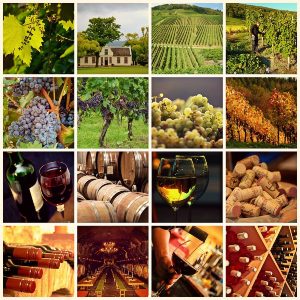
Step 2: How To Wash Winemaking Equipment
You will use a different washing technique for each piece of your winemaking equipment, however the following rules should be applied generally to everything.
Never soak equipment for long periods in solutions of chemicals. Some chemicals will damage the materials that your equipment is made from. Limit exposure to just enough time for the job needed.
Be careful to never scratch the surface of your equipment. Scratches will make your equipment more difficult to wash next time and will provide a home for micro-organisms and other contaminants. As a rule, only use cautious rubbing with something non-abrasive to help the washing process. Plain old agitation (shaking) will give great results with very low risk of damage.
Make a batch of your washing solution at the required strength. Wash stubborn dirt repeatedly with a clean dose of your washing solution. The washing power of fresh solution is stronger than solution already loaded with dissolved material you want to wash away.
Remember, sanitizing agents will not sanitize dirty surfaces effectively. So before moving on to sanitizing, ensure all surfaces are thoroughly washed and rinsed. Also, never mix a washing agent with a sanitizing agent to speed the process, it just doesn’t work. It may even be hazardous to your health!
What Supplies Are Best For Washing Wine Equipment
Washing products can contain several active ingredients, oxidizing agents like hydrogen peroxide, acids or alkaline chemicals, and surfactants (short for surface-active agent) that break down dirt and greasy residues. It’s very important you choose the washing agent that is correct for the material you want to clean. As a general rule Percarbonates, a combination of Sodium Carbonate and Hydrogen Peroxide, can effectively remove dirt and other contaminants from all types of winemaking equipment. The following are some common types of materials your equipment will be made from with recommendations how to wash them.
Washing Wood Winemaking Equipment
Wooden winemaking equipment covers items like long wooden spoons or wooden barrels. Both benefit from the same level of care. That means being very careful not to scratch the surface during washing.
Products containing Sodium Percarbonate are the best choice for washing wood. Sodium Percarbonate is commonly found in household laundry detergents. In water, it dissolves to release Sodium Carbonate and Hydrogen Peroxide making a very effective disinfectant and bleaching agent. Sodium Percarbonate has the advantage of dissolving tartrates, neutralizing acetic acid, and treating barrels affected by spoilage micro-organisms. It’s a big help with problem barrels.
Store Sodium Percarbonate solutions in a properly capped glass container as Hydrogen Peroxide tends to break down quickly.
Examples of products that contain Sodium Percarbonate include PBW (Powdered Brewery Wash), One Step No-rinse Cleaner, and B-Brite Cleanser.
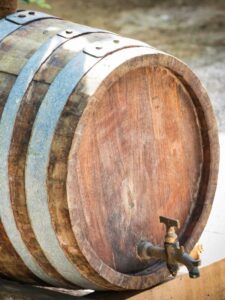
Washing Stainless Steel Winemaking Equipment
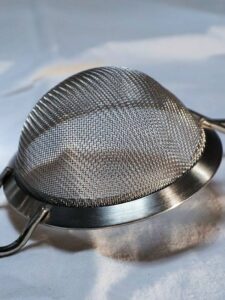
Stainless steel winemaking equipment includes items like sieves, spoons, jugs, or barrels. All benefit from the same level of care. That again means being careful not to scratch the surface during washing.
Products containing Sodium Percarbonate are also a good choice for washing stainless steel winemaking equipment.
For storage, the same advice still applies, store Sodium Percarbonate solutions in a properly capped glass container as Hydrogen Peroxide tends to break down quickly.
Examples of products that contain Sodium Percarbonate include PBW (Powdered Brewery Wash), One Step No-rinse Cleaner, and B-Brite Cleanser.
Washing Plastic Winemaking Equipment
Plastic winemaking equipment includes items like taps, funnels, spoons, jugs, or fermenters. All benefit from the same level of care. That again means being careful not to scratch the surface during washing. Plastic items are surprisingly easy to scratch even when the surface feels hard.
Products like PBW, again containing Sodium Percarbonate, are alkaline non-caustic and a good choice for washing plastic equipment. PBW is safe on skin as well as stainless steel, rubber, soft metals, and on of course plastics.
Examples of products that contain Sodium Percarbonate include PBW (Powdered Brewery Wash), One Step No-rinse Cleaner, and B-Brite Cleanser.
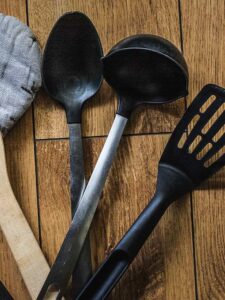
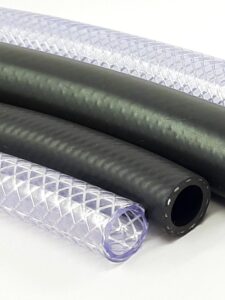
Washing Silicone Winemaking Equipment
Silicone winemaking equipment includes items like bungs, tubes, hoses, washers, o-rings, and gaskets. All of these items benefit from the same level of care used for soft equipment like wood. That again means being careful not to scratch the surface during washing. Silicone items are some of the most delicate items of winemaking equipment so always be very careful.
As mentioned above, PBW is safe on skin as well as stainless steel, rubber(silicone), soft metals, and on of course plastics. Products like PBW, are alkaline non-caustic and a good choice for washing silicone items of equipment.
Washing Glass Winemaking Equipment
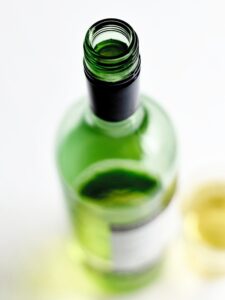
Glass winemaking equipment includes items like bottles, jugs, or carboys. While glass is hard to scratch, these items still benefit from special care as they are easily chipped, cracked or broken. Scratching glass is not so much of an issue as with other materials so these may be cleaned using more abrasive tools like a soft bristle bottle brush.
Products containing Sodium Percarbonate are also a good choice for washing glass. Sodium Percarbonate has the advantage of dissolving tartrates and neutralizing acetic acid and with a little agitation (shaking) can be very effective will a small amount of effort.
I was a little repetitive when writing about washing the different materials typically used by winemaking equipment. That was for a good reason. For the home winemaker, you don’t want or need many different chemicals to clean all these pieces of equipment. All you really need is a product that contains Sodium Percarbonate as it will be effective across all the usual materials your equipment is made from. I recommend using one of these:
- PBW (Powdered Brewery Wash)
- One Step No-rinse Cleaner
- B-Brite Cleanser.
Step 3: How To Sanitize Winemaking Equipment
Always choose a sanitizer that is suitable for the material your equipment is made from. Typical wine making equipment comprises food grade plastic, stainless steel, glass, soft rubber (silicone), and even wood.
Sanitizing agents typically consist of very aggressive oxidizing agents. These are effective in less than ten minutes. Soaking equipment in these sanitizers for long periods is unnecessary and can damage equipment.
Sanitizing Winemaking Equipment With Sodium Metabisulfite
Sodium Metabisulfite and Potassium Bisulfite, more commonly referred to as Sulfite or KMS in the case of the Potassium product, are the most widely used and most effective sanitizing agents for winemaking equipment. These are suitable for use on equipment made from wood, soft rubber(silicone), plastic, glass, and stainless steel. Note, Sodium Metabisulfite is corrosive to some metals and harmful if swallowed.
Always follow the manufacturer’s instructions when making a solution, however usually a 10% solution is needed. Allow the solution to be in contact with the equipment for approximately 10 minutes. Do not exceed this time, especially with stainless steel and silicone as damage to your equipment may occur over time. The solution can be reused for several weeks, so take the time to store it in a tightly closed plastic (PET) container.
Sanitizing Winemaking Equipment With Bleach
Bleach (Chlorine) solutions have long been used for sanitizing winemaking equipment. Bleach is very effective at removing stubborn stains on glass bottles and carboys. As well as being very effective at decolorizing equipment, Bleach is also an exceptional disinfectant.
To sanitize with Bleach, use a 0.1% solution. Fill containers that need to be sanitized and let them stand for 10 minutes. Do not leave your equipment soaking in Bleach overnight as this may adversely affect the integrity of the material. Thoroughly rinse the equipment at least three times with plenty of cool tap water. Bleach (Chlorine) is hard to rinse and can leave behind a nasty smell. There should be absolutely no trace of Bleach (Chlorine) solution or smell after the water rinse. If Bleach residue is left behind, wine will inherit an off-odor and maybe an off-flavor.
Bleach (Chlorine) should not be used on stainless steel equipment as over time pitting may result. It is not recommended that Bleach is used on plastic equipment or in oak barrels as both materials may absorb Chlorine. This makes it difficult to remove the Bleach (Chlorine) residue and is likely cause spoilage.
The major drawback of Chlorinated agents is that it they can be a source of the nasty chemical 2,4,6-trichloroanisole, better known as TCA, the compound responsible for the moldy musty smell in so called “corked” wines. If you have to deal with stubborn stains on glass and want to use Chlorine Bleach, do so outdoors well away from any other winemaking equipment.
Step 4: Winemaking Equipment Final Rinse
A final water rinse is always a good idea. Rinse with cool tap water. Some non-toxic sanitizing agents do not require a water rinse, however I recommend you rinse anyway. The rinse removes any trace of the sanitizing chemical and this enables you to check for odors. Any odor tells you that the equipment is not yet clean.
Having an odor is a sign that the equipment may not be completely clean. If you’re dealing with a carboy, bottle or fermenter, then you can try rinsing again in cool tap water, however if the odor remains, then the cleaning process should be repeated starting with the washing stage. Complete the full process again, starting at step 1. This is usually enough to ensure your equipment is clean and odor free.
How To Make 10% Sodium Metabisulfite Solution
Using your kitchen scales, measure 10 grams of Sodium Metabisulfite powder from the container. Add this to a cleaned Glass jar with a screw lid. Next add 100 ml (3.3 fuid ounces) water to the Glass jar. Place the lid on the jar and tighten. Gently shake until the powder is dissolved. Finally, label the Glass jar well. With the lid on, this will keep for months.
Best Wine Making Equipment Cleaner
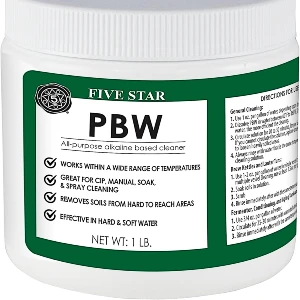
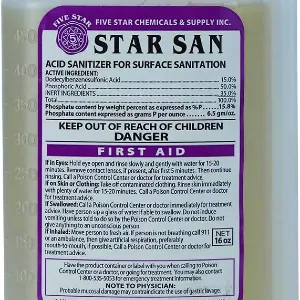
After years of experience, there are two supplies you need that will keep your equipment cleaned and sanitize, PBW (Powdered Brewery Wash) and a Sanitizing Agent. We’ve tried many brands and the following are our recommendations. They are both professional quality and good value for money.
As an Amazon Associate I earn from qualifying purchases.
As an Amazon Associate I earn from qualifying purchases.
Final Words: Cleaning And Sanitizing Winemaking Equipment
The washing and sanitizing of winemaking equipment are essential steps in ensuring the production of high-quality wines. Choose a washing agent and sanitizing agent that will suit your winemaking equipment. I recommend using PBW (Powdered Brewery Wash) as a good general washing agent. I recommend Sodium Metabisulfite as a good general sanitizing agent. Follow the simple 4 step process of Pre-rinse, Wash, Sanitize, and Rinse Again.
Thorough washing, the removal of residues, dirt, and unwanted microorganisms is necessary in preventing off flavors and spoilage issues. Sanitizing, on the other hand, eliminates any remaining microorganisms that might survive washing, safeguarding the integrity and stability of the wine during fermentation and aging.
By following proper washing and sanitizing procedures, winemakers can maintain a pristine and controlled environment that allows the fruits’ true character to shine through and create exceptional wines. Ultimately, the commitment to cleanliness is a fundamental aspect of winemaking, ensuring the enjoyment and satisfaction of every wine enthusiast.